


RocketGoal.io - Soccer League
PocketHaven
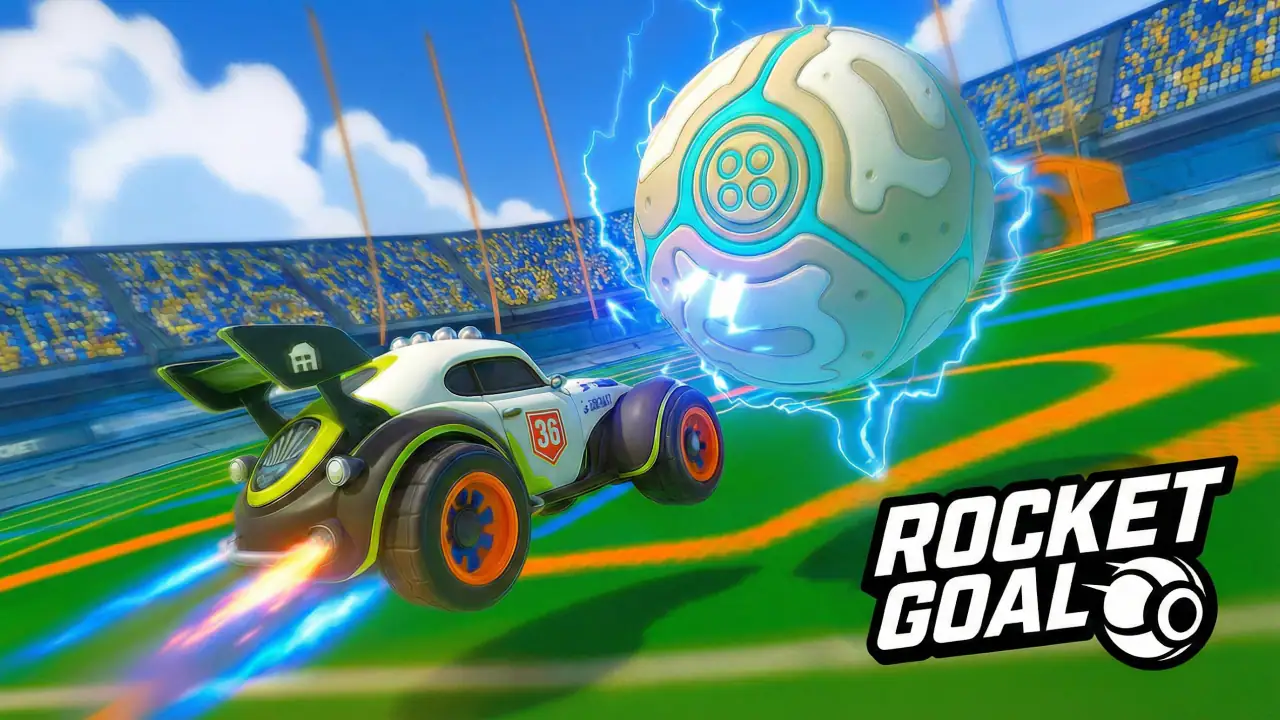
I spent time with RocketGoal.io - Soccer League as a quick, arcade-style sports game built around rocket-powered cars and soccer. The basic idea is easy to understand: get behind the wheel, chase the ball, and try to turn chaotic movement into useful attacks and saves. What makes it interesting is the way a familiar soccer objective becomes a driving challenge. You are not simply choosing a pass or taking a shot; you are constantly judging speed, position, momentum, and the angle of your car.
That combination gives it an immediate pick-up-and-play quality. I did not need a long explanation before understanding what I was supposed to do, but I also found that the simple premise leaves room for improvement. A new player can have fun by reacting instinctively, while someone who wants consistent results has to learn how to approach the ball rather than merely drive toward it. That difference is important when deciding whether this free sports game is worth keeping on your phone.
How the game feels in actual play
The strongest part of RocketGoal.io is its directness. The match objective is familiar enough that the game can get moving quickly, and the rocket-car theme gives ordinary soccer a more physical, unpredictable rhythm. A missed touch can send the ball somewhere unexpected, and a rushed approach can leave the car facing the wrong way at exactly the wrong moment. I found that the most satisfying plays were not always the hardest-looking ones. A well-timed interception or a controlled touch into open space often mattered more than simply charging forward.
At first, I played as though this were a conventional driving game with a ball added to it. That approach produced plenty of movement but not much control. The better method was to slow down mentally, watch the ball’s path, and arrive from an angle that gave the next touch a purpose. This is one of the game’s less obvious lessons: speed is useful, but speed without positioning can make you less effective. Players who accept that early will probably enjoy the learning curve more than those expecting instant mastery.
The car-soccer format also makes short sessions feel natural. I can imagine opening it while waiting for an appointment or taking a few matches during a break without needing to commit to a long play session. That convenience is a genuine part of its value. It is not trying to replace a full football simulation with detailed teams, realistic tactics, and a deep career structure. Instead, it focuses on the immediate pleasure of chasing the ball and creating a moment of attacking pressure.
Related News






Still, the same simplicity can limit its appeal. If your favorite part of soccer games is building a squad, managing formations, or controlling every phase of a realistic match, this is a very different experience. The appeal here comes from movement and timing. I would recommend approaching it as a compact arcade game rather than judging it by the standards of a traditional football title.
The first matches are easy to enter, but not always easy to control
My first impression was that the game’s accessibility comes from its uncomplicated goal. You do not need specialist football knowledge to understand what success looks like. However, knowing the objective and executing it are separate things. Cars have momentum, and the ball does not politely wait for a perfect approach. A player who constantly turns toward the ball at the last second may reach it, but the resulting touch can be weak, awkward, or actively harmful.
I found it more useful to think one contact ahead. Before moving toward the ball, I tried to decide whether I wanted to clear it, move it toward the opponent’s side, or keep myself between the ball and danger. That small change made matches feel less random. It also revealed a practical trade-off: aggressive play can create exciting chances, but conservative positioning is often better when the ball is near your own goal.
Gallery
Another useful habit is resisting the urge to chase every loose ball. In a rocket-car soccer game, several players can converge on the same target and turn a promising situation into a pile-up. Holding a little distance can leave room for a follow-up touch when the first player misses. This is the kind of decision that gives the game more depth than its short store description suggests, even though it remains approachable for casual players.
What the free price means for its value
RocketGoal.io is free to play, so the initial decision is straightforward: there is no purchase price to weigh before trying it. That makes experimentation easy, especially for someone who enjoys sports games but is unsure about the rocket-car format. I could treat a few short sessions as a test rather than feeling pressure to justify a paid download.
The important distinction is that free access does not automatically make every player a good match. The value depends on whether you enjoy the central loop of driving, contacting the ball, recovering position, and trying again. If that loop feels entertaining, the absence of an upfront cost is a strong advantage. If you want a rich football management experience, free access will not change the fact that the core format is arcade-oriented.
I would also avoid assuming that a free game delivers the same kind of value as a large premium sports title. A paid simulation may offer more depth in team control or presentation, while this game’s value is convenience and immediacy. For me, it worked best as something I could open without preparation. That is a different kind of value, but it is a real one for mobile players who prefer short, uncomplicated sessions.
The game is listed for Everyone, which fits the straightforward sports premise. That makes it easier to recommend as a casual title for a broad audience, although younger players may still need the usual guidance around device use and online habits. The age label tells me the content is broadly accessible; it does not guarantee that every player will find the controls equally comfortable or the matches equally calm.
Small decisions that improve the experience
The first practical tip I would give a new player is to stop treating the boost or rocket movement as a button to use whenever it is available. Saving acceleration for the approach to the ball, a recovery after a missed challenge, or a defensive return can be more valuable than spending it during ordinary travel. The exact benefit depends on the situation, but the principle is consistent: movement resources matter most when they change who reaches the ball first.
A second tip is to use the edges of the play area as reference points rather than drifting without a plan. When I knew where I wanted the ball to go, I could choose a line and prepare for the next touch. When I simply followed the action, I often ended up behind the play. This is especially useful for players who feel that the game is too chaotic during their first few matches.
Third, defensive play deserves more attention than it initially receives. It is tempting to stay near the opponent’s goal because scoring feels like the obvious contribution. In practice, returning to a central or protective position can prevent a counterattack and create a better chance a few seconds later. That makes the game more rewarding for players who like reading situations rather than constantly pursuing the highlight moment.
Finally, I would change only one habit at a time. Trying to master steering, timing, boosting, attacking angles, and defensive positioning all at once can make the controls feel worse than they are. I had a better experience when I focused first on arriving at the ball under control, then worked on directing the next touch. The game becomes less frustrating when improvement is treated as a sequence of small adjustments.
Where it sits beside familiar soccer games
Compared with a conventional mobile football game, this title puts the player inside the action instead of asking for broader team management. You are not primarily selecting a formation or guiding a realistic player through a full match. You are operating a vehicle whose movement directly shapes every contact with the ball. That makes it more immediate than a management-focused alternative, but less suitable for someone who wants detailed tactical control.
Compared with a standard driving game, the goal is not simply to finish a course or handle a vehicle cleanly. Every turn has a sporting consequence. A good line can become a pass, a clearance, or a shot, while a poor line can give possession away. This is why the game can feel more engaging than a basic driving challenge for players who want a clear competitive objective.
It also differs from a full premium sports release in presentation and commitment. A larger paid game may be preferable if you want licensed competitions, long-term team progression, or highly realistic football mechanics. RocketGoal.io makes more sense when you want the quick physical fun of car soccer without building a long campaign around it. Neither approach is automatically better; they answer different reasons for opening a sports game.
Who will get the most from it
I think the best audience is someone who likes arcade sports, short matches, and games that are understandable within minutes but still reward practice. It should appeal to players who enjoy the feeling of a near miss, a last-second defensive touch, or a shot created through good positioning rather than a complicated menu system. It is also a reasonable choice for people who want a free game to try casually before deciding whether the format suits them.
It may work particularly well for friends who enjoy comparing improvement rather than studying a large ruleset. One player can focus on attacking angles, another can specialize in defensive positioning, and both can find different ways to become useful. Even without treating the game as a serious esport, that division of attention can make repeated sessions more interesting than simply chasing the ball every time.
I would be less likely to recommend it to someone who dislikes vehicle physics, unpredictable rebounds, or games where a mistake can come from a small positioning error. Players who prefer slow, realistic football may find the rocket-car concept too exaggerated. Likewise, anyone looking for a deep single-player progression system should consider a more traditional sports title instead of expecting this game to provide a full career experience.
Device compatibility is also worth checking before installing: the current listing identifies Android 10 as the minimum operating system. On a compatible device, the game’s free entry point makes testing simple. On an older phone that cannot meet that requirement, the practical value disappears regardless of how appealing the gameplay sounds.
Developer, maturity, and signs of interest
PocketHaven is the developer behind the game. The listing shows an average rating of 4.7 from around two thousand nine hundred ratings, along with more than eighty written reviews. Those figures suggest that the game has attracted a positive early audience, while the review count is still small enough that I would treat the rating as an encouraging signal rather than a complete picture of long-term satisfaction.
It has passed one hundred thousand installs, which gives the game a meaningful starting audience for a relatively new mobile release. The listed release date is December 21, 2025, and the current version is 0.3091. That version number signals an actively developing product more than a finished, unchanging package. I would keep expectations flexible: updates may improve the experience, but early versions can also feel less settled than established sports games.
That early-stage character affects how I judge the game. I am more forgiving of rough edges when the central idea is enjoyable and the price is free, but I would not recommend it to someone who demands the polish and stability associated with a mature premium release. The right mindset is to evaluate whether the present gameplay is fun enough today, not to buy it based on what future updates might eventually add.
Everyday use: a short break that can become a practice session
Imagine having ten minutes before leaving for work or while waiting for a meal. A game like this fits that moment because the basic objective is immediately readable. I could start with a casual match, notice that my touches were too rushed, and use the next session to work on approaching from a better angle. That gives the break a small sense of progression without requiring a large time commitment.
The same scenario also shows the main limitation. If I only have enough time for one rushed match, an unlucky rebound or a poor opening can make the session feel unsatisfying. This is not a quiet puzzle game that lets me pause after every decision. Its fun depends on accepting a little disorder and being willing to play another round after a mistake. For a calm, interruption-friendly experience, another category may be a better fit.
For a younger or less experienced player, I would suggest starting with a simple goal such as learning to make controlled contact rather than focusing only on scoring. That turns the first sessions into practice instead of a series of confusing misses. For an experienced arcade player, the challenge is different: deliberately taking safer lines and learning when not to attack can reveal more depth than constant aggression.
My verdict on whether to install it
RocketGoal.io - Soccer League is worth trying if you want free, accessible sports action built around rocket cars rather than realistic football simulation. I enjoyed the way it turns positioning and momentum into the main source of challenge. The game is easy to understand, but its better moments come from learning not to rush every contact. That balance gives it more staying power than a purely automatic arcade experience.
My recommendation is more cautious for players seeking depth outside the match itself. The free price removes the financial risk of testing it, but it does not make the game a substitute for a full football simulator, a management game, or a polished premium sports package. If your interest is specifically in squad building, realistic tactics, or a long career, I would skip this one and choose an alternative designed around those priorities.
For everyone else, I would install it with a simple expectation: this is a compact car-soccer game to play in bursts, learn through repetition, and enjoy when a messy situation suddenly becomes a clean attacking chance. Its best value is immediate, free access to a distinctive sports loop, not a promise of the broadest feature set. With that understanding, PocketHaven’s game earns a recommendation for casual arcade fans and a cautious trial for anyone curious about the format.
FAQs for RocketGoal.io - Soccer League
What is RocketGoal.io - Soccer League?
RocketGoal.io - Soccer League is a fast-paced mobile soccer game focused on short matches, arcade-style controls, and competitive play. Instead of offering a traditional football simulation, it combines simple driving and ball mechanics with quick arena action. The game is designed for players who want to score goals, improve their reactions, and compete without spending a long time in each match.
Is RocketGoal.io - Soccer League free to download and play?
RocketGoal.io - Soccer League can generally be downloaded for free, although the available features may depend on the version and platform you use. Like many free mobile games, it may include optional advertisements, in-app purchases, or cosmetic and progression-related items. Before downloading, check the store listing for the current pricing details, supported devices, and any purchase requirements.
Does RocketGoal.io - Soccer League require an internet connection?
An internet connection may be needed for important features such as online matches, leaderboards, account synchronization, updates, and competitive events. Some versions may allow limited offline practice or solo gameplay, but you should not assume that every mode will work without connectivity. A stable connection is especially important during multiplayer matches to reduce delays and disconnections.
Is RocketGoal.io - Soccer League suitable for beginners?
Yes, the game is approachable for beginners because its core objective is easy to understand: control your vehicle, hit the ball, defend your goal, and score against the opponent. However, becoming competitive takes practice. New players may need time to learn movement, timing, positioning, and ball control, particularly when facing experienced opponents in faster or more challenging matches.
What devices are compatible with RocketGoal.io - Soccer League?
Compatibility depends on the specific Android or iOS version available in your region. Before installing, review the official store page to confirm the required operating-system version, available storage, and device support. Older phones may run the game with reduced performance, while newer devices should provide smoother controls, faster loading, and more consistent frame rates during matches.
Pros
- Quick matches make it easy to play during short breaks.
- Simple controls are accessible for casual soccer fans.
- League progression gives matches a clear sense of purpose.
- Compact gameplay works well on most modern mobile devices.
- Competitive results can encourage regular play and improvement.
Cons
- Online competition may feel difficult for newcomers.
- Progress can become repetitive after extended sessions.
- A stable internet connection may be required for key features.
- Some players may find the presentation less polished than major titles.
- Limited team or league variety could reduce long-term appeal.


